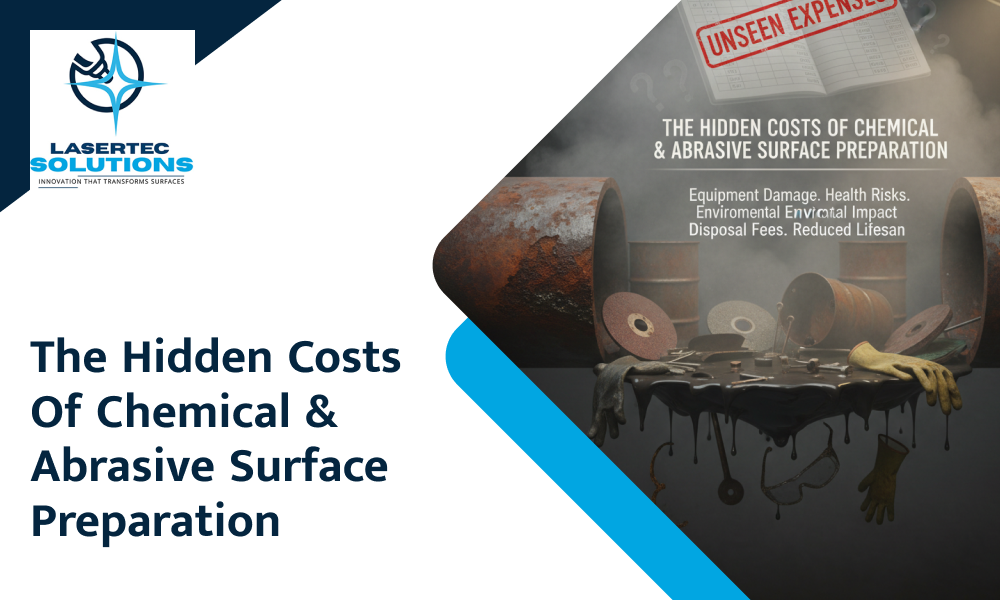
At first glance, chemical stripping, manual scrubbing and abrasive blasting seem inexpensive. The equipment is common, the process is familiar and many operators are trained in these methods. But for industries such as food manufacturing, plastics production, heavy manufacturing, marineand precision engineering, these “low-cost” methods come with hidden expenses that can far outweigh any initial savings.
Waste Disposal Costs
Chemical baths and abrasive media generate large volumes of hazardous waste. Disposal requires licensed contractors and compliance documentation. For example, removing paint from a food-grade production line can result in hundreds of kilograms of contaminated grit that cannot simply be discarded and residues from the system
Laser cleaning produces minimal dry dust and no chemical waste—cutting disposal and post cleaning costs significantly.
Health & Safety Compliance
Dust inhalation, chemical burns, thermal burns, cuts and fume exposure are serious WHS issues. Compliance means investing in PPE, ventilation and employee training. In food manufacturing, these risks are even more tightly controlled to prevent contamination.
Laser cleaning is a safer process with fewer PPE requirements and no harmful vapours—improving worker safety while reducing compliance overhead.
Risk of Surface Damage
Abrasive blasting can erode the substrate, particularly softer metals like aluminium or stainless steel. For plastics manufacturing, where moulds must be kept to exact tolerances, even minor damage can lead to costly defects.
Laser cleaning preserves the base material while still removing the toughest residues, extending the lifespan of critical equipment.
Downtime Losses
Every hour equipment is offline for cleaning is an hour of lost production. With traditional methods, prep and cleanup can take longer than the cleaning itself. For engineering companies maintaining compressors or hydraulic systems, this means extended customer delays.
Laser systems work faster and require almost no cleanup, getting assets back into service quickly.
Environmental Impact
The environmental footprint of chemical and abrasive cleaning is often underestimated. Wastewater discharge, airborne dust, and media disposal all carry compliance costs—and potential fines for breaches.
Laser cleaning supports sustainability goals by producing minimal waste and eliminating hazardous runoff.
The Real Cost Equation
When total costs are considered—waste disposal, WHS compliance, damage risk, downtime and environmental impact—laser cleaning delivers a clear financial advantage. What appears “cheaper” upfront can become a major cost centre over time.
For industries where hygiene, precision, and compliance are non-negotiable, it’s time to rethink surface preparation.
At Lasertec Solutions, we go beyond surface-level cleaning to deliver real performance benefits for your business. Our advanced laser cleaning systems help you reduce operational costs, improve equipment longevity, and ensure consistent product quality.
Copyright Ⓒ 2025 All Right Reserved By Lasertec Solutions | Designed by : SEO Company in Ahmedabad - Aom Web Designer
Be the first to know about new arrivals and promotions