Rust is one of the most common challenges in engineering and maintenance. It
affects shafts, gears, bearings, and a wide range of precision components. Left
untreated, it leads to failure and costly downtime. Treated incorrectly, it can shorten
component life and increase maintenance budgets.
Problems with Traditional Methods
Conventional approaches such as abrasive blasting, wire brushing, or chemical
cleaning remove rust, but they often create new problems. Abrasive methods can
scratch surfaces, change tolerances, and reduce part accuracy. Chemicals may
leave residues and require careful disposal. Even after treatment, many components
need re-machining or replacement — adding both time and cost.
Why Laser Technology Works Better
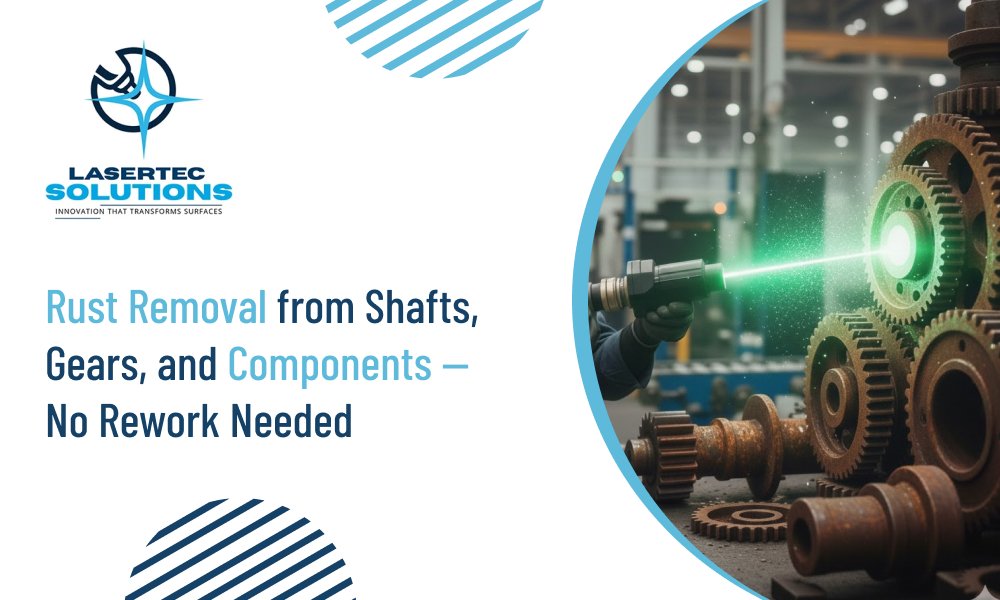
Laser surface treatment eliminates rust with precision. A focused beam removes
only the corrosion, leaving the base material untouched. This means shafts, gears,
and components are restored to service without rework.
Key advantages include:
- No abrasion: Protects tolerances and preserves part geometry.
- No chemicals: Cleaner, safer process with no secondary waste.
- Minimal downtime: Faster turnaround compared to conventional methods.
- Extended component life: Parts can be reused instead of replaced.
Lower Costs, Higher Reliability
For maintenance and engineering teams, the difference is clear. Instead of scrapping
or re-machining valuable components, laser treatment restores them to full function.
The result is lower repair costs, improved reliability, and less waste.
At Lasertec Solutions, we specialise in non-abrasive rust removal that keeps shafts,
gears, and precision parts working longer — with no rework required.
Learn more at www.lasertec.au.